
Linear Actuator Comparison: Electric vs. Pneumatic vs. Hydraulic
25th Jun 2026
Linear Actuator Comparison: Electric vs. Pneumatic vs. Hydraulic
Choosing the wrong actuator technology can cost a plant far more than the actuator itself. Air leaks, fluid contamination, missed positioning, and unplanned downtime all trace back, more often than people admit, to a sourcing decision made on price or familiarity rather than fit. This linear actuator comparison walks through how electric, pneumatic, and hydraulic actuators actually behave on the floor — how they generate force, how they're controlled, what they cost over a full-service life, and where each one earns its place.
The short version: pneumatic actuators are simple and fast, hydraulic actuators are powerful, and electric actuators are precise and increasingly economical across more applications than they used to be. The long version is where the money is.
The three technologies, in plain terms
Before getting into trade-offs, it helps to be precise about what each technology actually does.
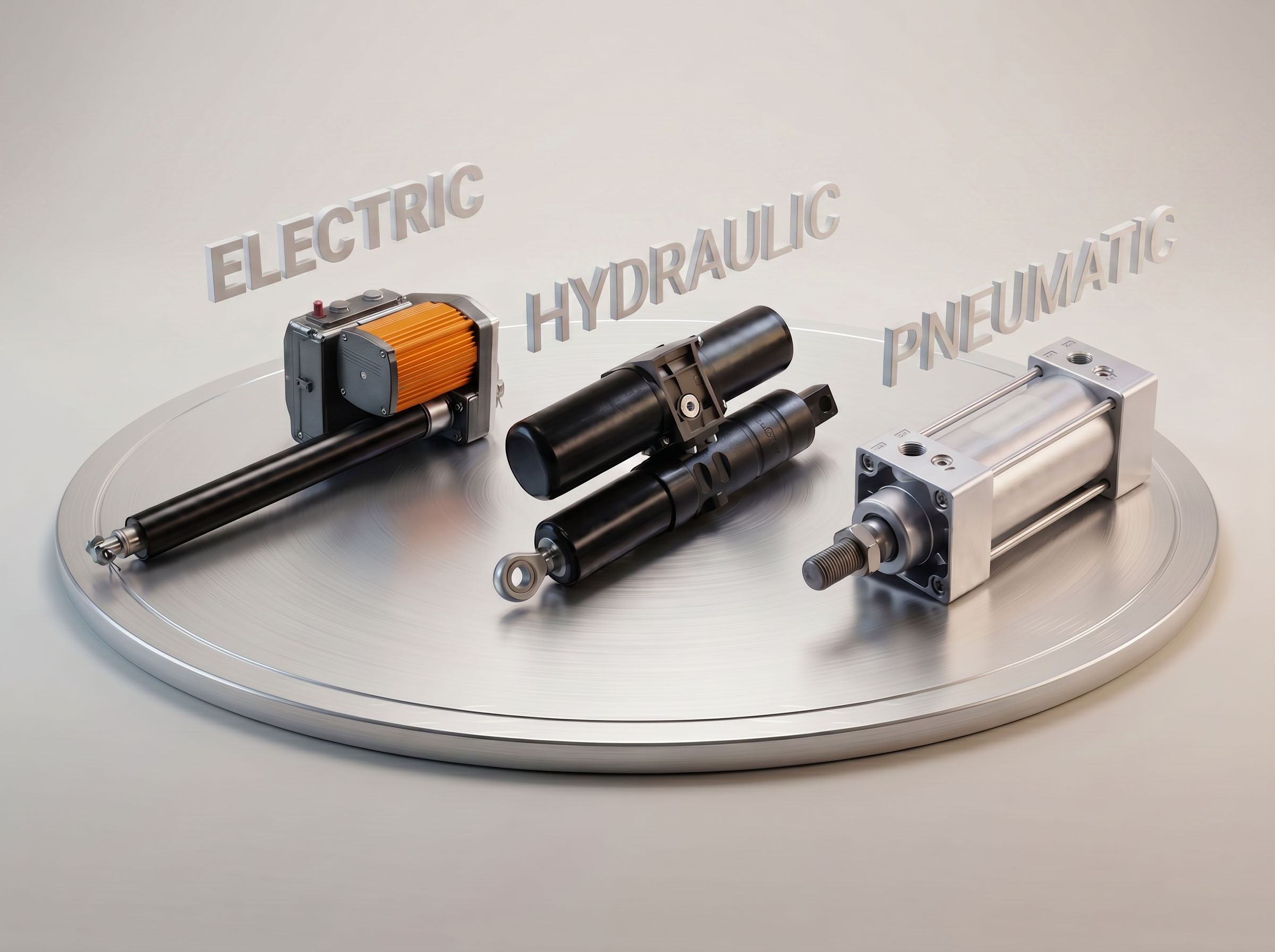
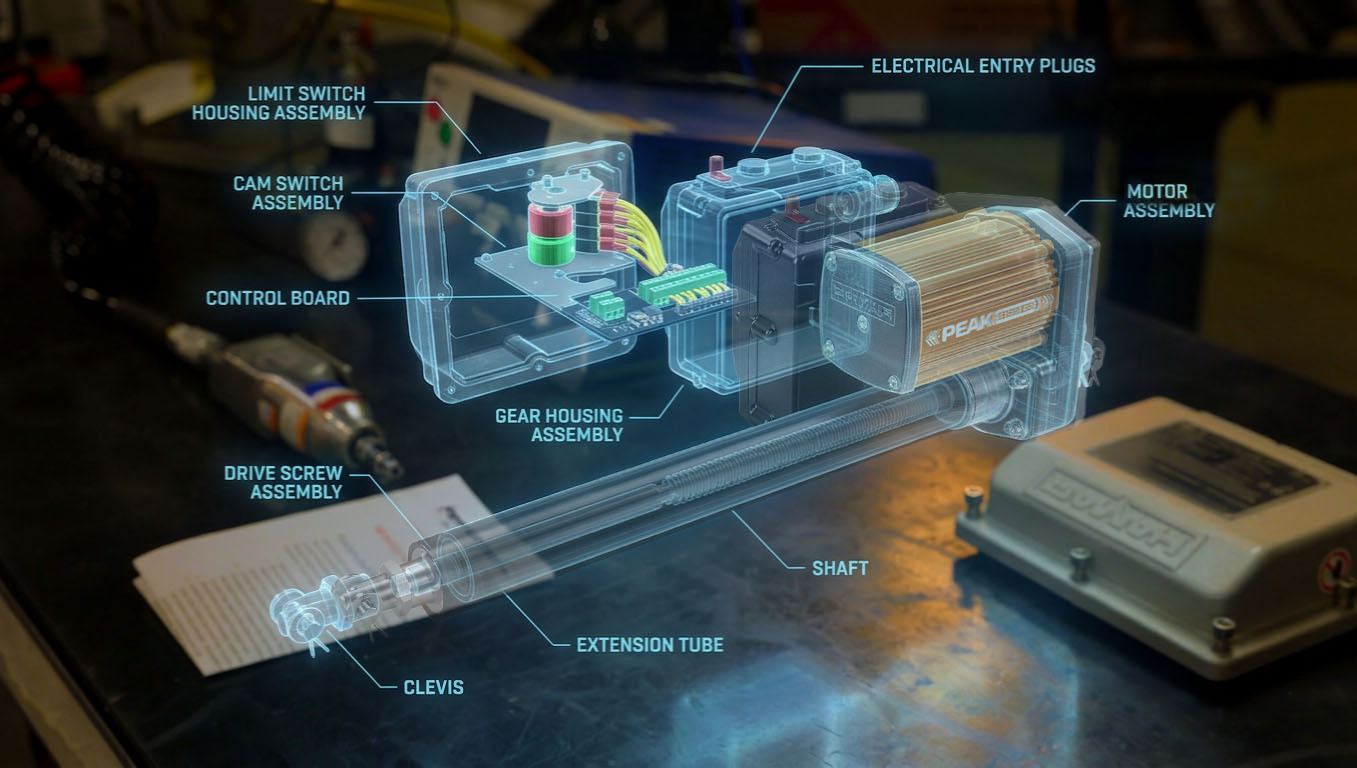
Electric linear actuators convert electrical energy into linear motion, typically through a motor driving a lead screw, ball screw, or roller screw. Position, speed, and force are controlled directly through the motor's drive electronics. Modern units accept standard process signals (4–20 mA, 0–10 V, fieldbus protocols) and report back position and diagnostics over the same wiring.
Pneumatic linear actuators use compressed air — usually 80 to 120 psi (5.5 to 8.3 bar) — acting on a piston inside a cylinder. The motion is fast, the hardware is mechanically simple, and force is set by the supply pressure and piston area. Control is usually two-position (extended or retracted) via a solenoid valve, though proportional control is possible at higher cost and complexity.
Hydraulic linear actuators use pressurized oil — commonly 1,500 to 3,000 psi (103 to 207 bar), with specialty systems running higher — driving a piston in a cylinder. They produce very high force in a compact envelope and hold position well under heavy load. They require a hydraulic power unit (HPU) with a pump, reservoir, filtration, and cooling.
Each technology has different strengths, different failure modes, and a very different cost curve over the life of the equipment.
Force, speed, and stroke: matching the actuator to the load
The first question in any actuator selection is whether the technology can physically do the job.
Hydraulic wins on raw force density. A compact hydraulic cylinder can produce tens of thousands of pounds of thrust in a package that would be impractical to match electrically or pneumatically. This is why hydraulics dominate heavy presses, large-bore valve actuation, and mobile equipment lifting.
Pneumatic is the speed champion for short, repetitive strokes — think bottling lines, packaging, and pick-and-place. Force is moderate (typically up to a few thousand pounds-force, depending on bore and supply pressure) and falls off sharply if the air system is undersized or leaking.
Electric has closed the force gap meaningfully over the last decade. Modern roller-screw and high-ratio designs deliver thrust ratings that overlap deep into territory once owned by hydraulics. For most valve, damper, and louver applications in industrial plants, an appropriately sized electric linear actuator has more than enough force, and it delivers that force with precise, repeatable positioning that the other two technologies cannot match without significant added cost. Hamar electric linear actuators are engineered for this class of duty across industrial process applications.
A practical rule of thumb: if the application needs precise positioning along the stroke (not just end-to-end travel), electric is the natural fit. If it needs the highest possible force in the smallest possible package and positioning accuracy isn't critical, hydraulic earns the call. If it needs to cycle fast between two endpoints and the air system is already there, pneumatic is hard to beat.
Control precision and repeatability
This is where electric has pulled meaningfully ahead.
|
Capability |
Electric |
Pneumatic |
Hydraulic |
|
Position feedback (native) |
Yes |
No (add-on) |
No (add-on) |
|
Modulating control |
Yes |
Difficult / costly |
Yes (servo-hydraulic, costly) |
|
Repeatability |
High (typically sub-millimeter) |
Moderate to low |
Moderate (depends on valves) |
|
Standard signal inputs (4–20 mA, 0–10 V, fieldbus) |
Native |
Requires positioner |
Requires positioner |
|
Diagnostics over the same wiring |
Yes |
No |
No |
For modulating control — where the actuator must hold an intermediate position based on a process signal — electric is the simplest path. A standard process signal in, motion out, position feedback returned. Pneumatic modulating control is possible with a smart positioner, but the cost difference closes the gap against electric, and the maintenance burden remains higher. Hydraulic modulation is generally reserved for applications where the force requirement leaves no other choice.
For on/off service where neither speed of response nor positioning accuracy is critical, pneumatic remains a sound choice, and many plants run thousands of pneumatic actuators reliably for years.
Total cost of ownership, not just sticker price
The single most common procurement mistake is comparing actuator purchase prices and stopping there. The capital cost of the actuator itself is rarely the dominant cost over a fifteen-year service life.
Pneumatic has the lowest entry cost per actuator if a plant air system already exists. But compressed air is one of the most expensive utilities in any industrial facility — most of the energy put into the compressor ends up as heat, and undetected leaks routinely consume 20 to 30 percent of compressed-air generation capacity in plants that don't actively manage them. Spread across a fleet of actuators, the cumulative energy cost dwarfs the hardware cost.
Hydraulic carries the cost of the HPU, oil, filtration, hoses, and the labor to maintain all of it. Oil leaks create housekeeping and safety problems; oil disposal carries environmental cost; and HPU energy efficiency is typically lower than people assume because the pump runs whether the actuator is moving or not (unless the system is designed with accumulators or variable-speed pumping).
Electric has a higher per-unit purchase price than a comparable pneumatic actuator, but it draws power only when moving, has no consumables in normal service, and routinely runs for years without intervention. There's no air system to maintain, no oil to filter, no leaks to chase. For modulating service in particular, the lifecycle math frequently favors electric within two to four years of installation.
This is the part procurement teams should put a sharp pencil to: cost the system, not the part.
Where each technology fits best
Rather than picking a winner, the honest answer is that each technology has a sweet spot.
Where pneumatic still earns its keep
- High-cycle, two-position service (packaging, bottling, sorting) where the air system is already engineered for it
- Light-duty linear motion in clean environments
- Applications where simplicity and low-cost spares matter more than precision
- Process areas where compressed air is genuinely the most convenient utility on hand
Where hydraulic is the right call
- Very high force in a small envelope (heavy presses, large valve operators, dam gates)
- Applications with high shock loading where the fluid acts as a damper
- Mobile and off-highway equipment where the hydraulic system already exists for other functions
- Force-holding under static load for long periods
Where electric wins decisively
- Modulating control with position feedback (any 4–20 mA application)
- Process valves, dampers, and louvers in industrial plants
- Locations far from compressed air or hydraulic infrastructure
- Energy-sensitive operations and facilities working toward efficiency targets
- Applications requiring data — position, motor current, fault status — back to the control system
- Hazardous-area service, where Hamar's explosion-proof linear electric drives eliminate the need to run pneumatic or hydraulic lines into classified locations:
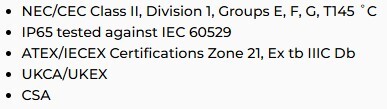
That last point is worth dwelling on. Plants that historically chose pneumatic for hazardous areas because it was assumed to be the only safe option now have a direct alternative in explosion-proof electric actuation, with the precision and diagnostic benefits electric brings.
Practical considerations for maintenance and operations
Engineering selects the technology, but maintenance lives with it. A few realities worth pricing in:
- Pneumatic systems require ongoing leak detection and repair, filter and lubricator service, condensate management, and air-quality monitoring. Failures are usually graceful (loss of force or speed before total failure), which makes them easier to catch but also easier to ignore until a line goes down.
- Hydraulic systems require oil sampling, filter changes, hose inspection, and seal replacement. Contamination is the leading cause of premature failure in hydraulic actuators, and it's often introduced during maintenance rather than in service.
- Electric actuators require very little routine maintenance — typically periodic inspection and lubrication on a long interval, plus verification of position calibration. When they do fail, they tend to fail electronically rather than mechanically, which makes diagnosis quick when the drive reports a fault code but harder when it doesn't.
For new installations, the absence of a supporting infrastructure (compressor, HPU, hoses, conditioning) is a meaningful argument for electric. For retrofits into plants with mature pneumatic or hydraulic infrastructure already, the calculus depends on whether that infrastructure is healthy or itself overdue for renewal.
Selection checklist
When narrowing a linear actuator comparison down to a specific application, work through these questions in order:
- What's the required thrust at the worst-case load? If it exceeds what electric or pneumatic can deliver in a reasonable envelope, hydraulic is on the short list.
- Is positioning along the stroke required, or just travel between endpoints? Modulating service strongly favors electric.
- What's the duty cycle? Continuous modulation, high-cycle on/off, or occasional operation each point to different optimums.
- Is the location classified as hazardous? If yes, confirm the certification rating required (Class/Division/Zone) and verify each candidate against it.
- Is the supporting utility (air, hydraulic power) already in place and well-maintained? If not, the cost of provisioning it is part of the actuator decision.
- What signal types does the control system use? Native 4–20 mA, 0–10 V, or fieldbus support reduces integration cost.
- What's the expected service life, and what does maintenance look like at year ten? Lifecycle cost rarely favors the lowest-priced option.
A disciplined pass through those seven questions usually surfaces the right answer without much further debate.
Frequently asked questions
Are electric linear actuators powerful enough to replace hydraulic in industrial valve service?
For most process valve and damper applications in industrial plants, yes. Modern electric linear actuators — particularly those using roller-screw or high-ratio designs — deliver thrust well into the range required for the majority of valve and damper duties. Hydraulics retain an advantage only at the upper end of the force range or where extreme shock loading is present.
How does explosion-proof electric actuation compare with pneumatic in hazardous areas?
Pneumatic actuation has historically been the default in hazardous areas because it carries no ignition source. Explosion-proof electric linear actuators eliminate that constraint without giving up the precision, feedback, and energy efficiency electric offers. For modulating control in hazardous service, explosion-proof electric is now a direct alternative to pneumatic-with-positioner.
Which actuator type has the lowest total cost of ownership?
Across most industrial modulating applications, electric. Pneumatic appears cheaper at purchase but loses ground quickly to compressed-air energy cost and leak losses. Hydraulic carries HPU energy, oil, and maintenance burdens that are easy to underestimate. Run the lifecycle math for the specific application — the answer is rarely the lowest-bid actuator on the quote.
Can pneumatic actuators provide accurate modulating control?
Yes, with a smart positioner, but the cost gap to electric narrows considerably once positioning hardware and air-quality conditioning is accounted for. For new specifications where modulating control is required, electric is usually the simpler and lower-lifecycle-cost path.
What's the typical service life of an electric linear actuator in industrial use?
It varies with duty cycle, load, and environment, but properly specified electric actuators routinely deliver years of service with minimal intervention in continuous-duty industrial applications.
The takeaway
A linear actuator comparison shouldn't be a contest. Electric, pneumatic, and hydraulic each solve real problems, and each has applications where it's clearly the right answer. The mistake is defaulting to whichever technology a plant has always used, without re-evaluating current options.
For most industrial modulating applications — valves, dampers, louvers, gates, and positioning systems — electric linear actuators offer the best combination of precision, lifecycle cost, and integration with modern control systems. Where the application is in a classified location, explosion-proof electric linear drives now provide a direct alternative to pneumatic that wasn’t available a decade ago.
The right call is application specific. The right process is the same every time: cost the system, not the part; specify for the duty cycle that’s going to be run; and make sure the technology fits the people who will maintain it on year ten, not just commission it on day one.
To talk through a specific application with Hamar’s engineering team, visit https://hamar-automation.com/contact-us/ or call +1 (785) 404-1628