
What Is an Electric Linear Actuator? (Beginner's Guide)
8th Apr 2026
What Is an Electric Linear Actuator? A Beginner's Guide
Automation relies on physical movement. Converting energy into controlled, reliable motion forms the foundation of modern manufacturing, processing, and assembly. An electric linear actuator achieves exactly this, taking electrical power and transforming it into straight-line mechanical force to push, pull, lift, or position a load.
Understanding how these devices function helps facilities improve process efficiency and establish long-term reliability. Unlike complex hydraulic systems that require extensive plumbing, or air-driven mechanisms that depend on continuous compressor operation, an electric linear actuator offers a self-contained solution. This simplicity makes them an increasingly popular choice across various sectors.
This comprehensive guide will explain the internal mechanics of these devices, explore the different types available, and highlight their primary benefits. You will also learn about common applications, critical selection factors, and essential maintenance practices to keep your equipment running at peak performance.
How an Electric Linear Actuator Works
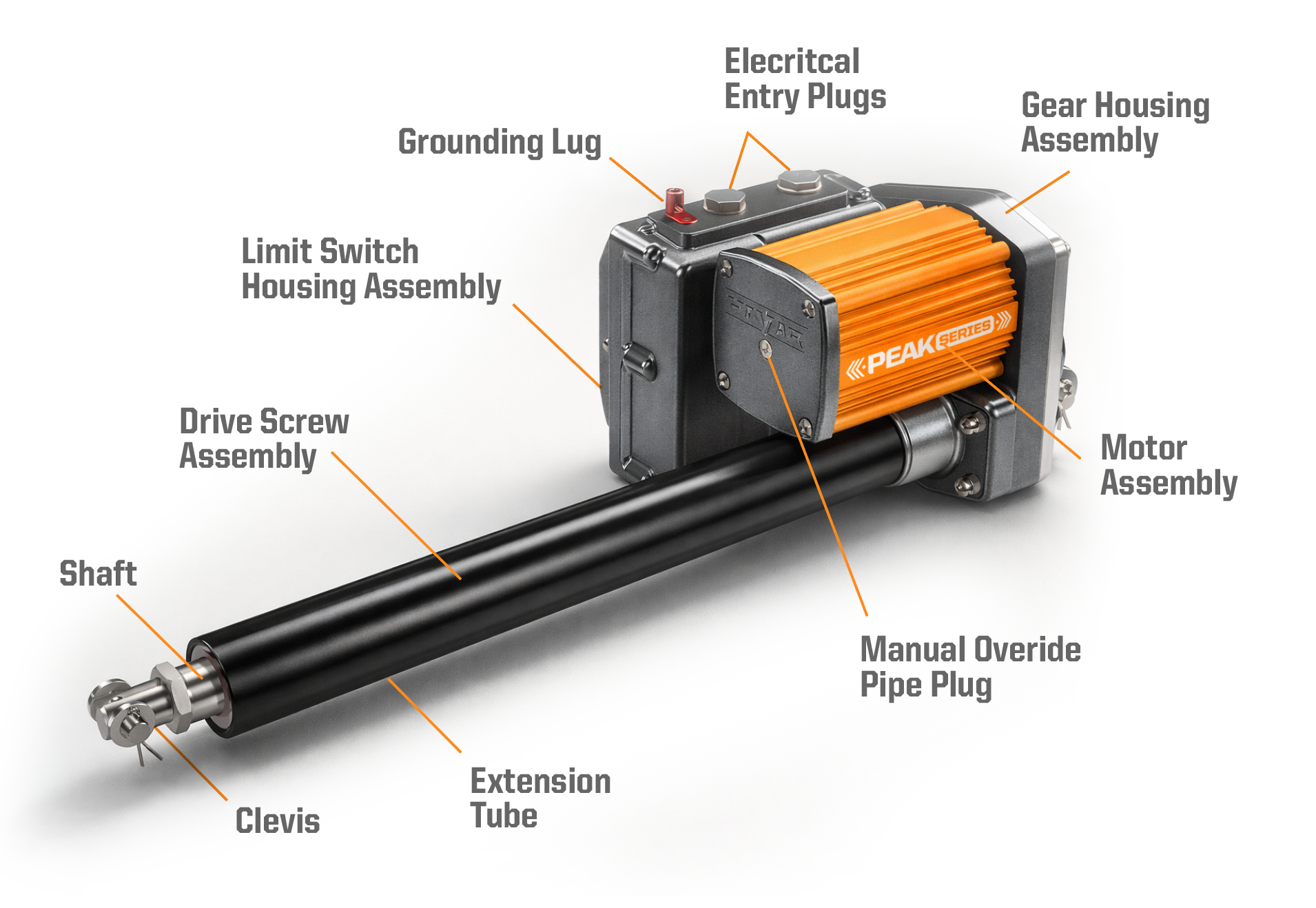
While designs vary among manufacturers, the fundamental mechanics remain consistent. A high-quality industrial electric actuator typically consists of three primary subassemblies working together to generate linear motion.
The Drive Motor
Functionality begins with the drive motor, which provides the initial rotational force. This motor contains a rotor and stator assembly designed for specific speeds and starting torques. Many robust industrial models use high starting torque AC induction motors equipped with internal thermal overload protection. This safety feature prevents catastrophic failure by stopping the motor if environmental or operational conditions push temperatures too high.
Gearbox Assembly
The motor's output shaft connects to a gear housing. Inside, a series of precisely engineered gears reduce the motor's high rotational speed while simultaneously multiplying its torque. This gear train ensures the actuator operates at the correct actuation speed. A well-designed gearbox is typically packed with long-life grease and sealed, requiring virtually no service under normal operating conditions.
The Lead Screw and Drive Nut
The rotational motion from the gearbox transfers to a drive screw, often utilizing strong Acme threads. A drive nut connects to an extension tube and rides along these threads. As the screw turns, the drive nut is forced to move forward or backward along the shaft. This action effectively translates the rotational movement into the precise linear force needed to operate industrial equipment.
Common Applications for the Industrial Actuator
Because of their reliability and strength, these devices serve critical roles across numerous industries. They handle everything from fine powders to abrasive rock.
Actuator for Slide Gate and Diverter Valve
In dry bulk processing, controlling the flow of materials is essential. An actuator for slide gate applications provides the necessary force to cleanly sever a column of flowing material. Similarly, an actuator for diverter valve systems allows facilities to safely route heavy-duty or abrasive bulk solids from one source toward multiple destinations. The smooth, consistent stroke of an electric motor prevents the jarring impacts that can damage valve seals over time.
Actuator for Bulk Material Handling and Dust Collection Systems
Facilities handling grain, cement, or petrochemicals rely heavily on reliable automation. Using an actuator for bulk material handling ensures consistent loading and unloading processes. Additionally, workplace safety protocols mandate clean air. Using an actuator for dust collection systems helps automate filtration vents and discharge valves, effectively controlling problematic air and dust mixtures at their source.
Home Automation and Automotive
Beyond heavy industry, compact electric actuators power the adjustable beds, automated window blinds, and smart recliners found in modern homes. In the automotive sector, they manage power liftgates, automated steps, and precise throttle controls.
Choosing the Right Industrial Electric Actuator
Selecting the correct model prevents premature equipment failure and processing inefficiencies. Always evaluate the required force, necessary stroke length, and desired velocity. An undersized unit will stall under heavy loads, while an oversized unit wastes energy and capital.
Furthermore, consider the operating environment. Products built with quality components should carry appropriate certifications. Look for NEMA ratings, IP65 dust and water resistance, and ATEX explosion-proof certifications if your facility handles combustible dust or hazardous materials.
Powering the Future of Automation
Reliable, controlled motion sits at the heart of operational success. Whether you are routing abrasive minerals through a factory or automating dust management protocols, integrating an electric linear actuator offers a distinct competitive advantage. They deliver unmatched precision, simplify your installation requirements, and drastically reduce ongoing maintenance burdens.
By understanding your specific application parameters and investing in high-quality, certified equipment, you can ensure your processes run smoothly for years to come. If you are ready to upgrade your facility's flow control systems, our engineering team provides comprehensive support to match the exact solution to your application. Easy online orders and reorders make your buying process as simple as possible.